LIL at ST&D 2026
Our LIL students and faculty will be presenting their work at the 2026 ST&D conference in Charlotte, North Carolina. If you're attending, we encourage you to stop by their sessions and check out the work that they've been doing.
Note: All LIL members in bold. All times are listed in Eastern Standard Time.
Wednesday, July 29
Critically Examining the Perceptual Decoupling – Mind Wandering Link: Implications for Comprehension
Vishal Kuvar, Mya Urena, Zachary Irving, Samuel Murray, and Caitlin Mills
Spoken Presentation: 3:15 pm, Room B
Mind wandering (MW), a cognitive state in which thoughts move freely, is shown to negatively influence comprehension. It is theorized that to experience MW one must disconnect from external stimuli i.e., perceptually decouple. We challenge this by presenting evidence that MW can occur while being perceptually coupled. Perceptually coupled MW also increased creativity levels, suggesting that such an experience might improve comprehension by helping readers make better elaborative inferences.

Presenter: Vishal Kuvar

Presenter: Christopher Steadman
The Lingering Effects of Difficulty: Perceived Difficulty and Task-Unrelated Thought During Learning
Christopher Steadman, Aaron Wong, and Caitlin Mills
Spoken Presentation: 4:15 pm, Room C
Task-unrelated thought (TUT) is negatively associated with learning, yet little work has examined whether moments of inattention lead to further inattention. Across two studies, we examined how starting with difficult lecture material influences perceived difficulty and TUT. We found that experiencing initial difficulty was associated with easier material being perceived as more difficult and higher rates of TUT. These results suggest that subjective difficulty is a key driver of sustained inattention.
Using Eye Gaze Data to Track Changes in Reading Behaviors with Parallel Texts
Amanda Jensen, Stephen Hutt, Laura Allen, and Panayiota Kendeou
Spoken Presentation: 4:35 pm, Room C
This study investigated how multilevel textual features impact reading behaviors during parallel text processing (original and simplified versions side-by-side). Participants (n=100) read the story while their eye gaze was recorded via webcam. Linguistic features were analyzed against reading behaviors including number of switches between versions and fixation duration. Results showed that more difficult words and high sentence complexity significantly increased switching, indicating that readers utilize the alternate text strategically to mitigate increased linguistic challenges.

Presenter: Amanda Jensen

Presenter: Wei (Vincy) Zhang
Understanding Persuasive Routes in AI-powered Misinformation Revision
Wei Zhang, Luan Tuyen Chau, Rakshithaa Selvarathinam, Laura Allen and Panayiota Kendeou
Poster Presentation: 5:30 pm - 7:00 pm, Atrium (2nd level)
AI misconceptions are widespread in education, and chatbot-based refutations have shown promise for misconception correction. Drawing on the Elaboration Likelihood Model (ELM), this study examines how empathetic and simple refutational chatbot designs engage users in different information-processing routes. Using linguistic analysis of chatbot-user dialogue, results suggest empathetic chatbots elicit more affective language, while simple chatbots elicit more analytic language, with similar cognitive engagement. These findings indicate different, albeit effective for revision, processing routes.
Thursday, July 30
Tracing the Pathway to Proficient Reading: Effects of a Year-Long Targeted Intervention on Reading Subskills
Christopher Steadman, Stephen Hutt, Margaret Osgood Opatz, and Panayiota Kendeou
Spoken Presentation: 1:30 pm, Room A
This study examined how targeted interventions impact reading subskills for middle school students over a school year. Using the ReadBasix assessment, we investigated multiple interventions and saw impacts on decoding, sentence processing, reading efficiency and comprehension. Our results suggest that foundational skill gains (i.e., decoding) often precede higher-order growth (i.e., reading comprehension), which supports the decoding threshold hypothesis. These findings also emphasize the need for longitudinal tracking of intervention efficacy.
Presenter: Christopher Steadman
Friday, July 31

Presenter: Ali Fulsher
Clarifying the Construct of Sourcing: A Scoping Review and Secondary Analysis of Process Data
Ali Fulsher, Haolan Wang and Panayiota Kendeou
Spoken Presentation: 9:00 am, Room B
Sourcing is a broad construct, encompassing many uses of source features to predict, interpret, and evaluate texts. Recent systematic review results indicate that how sourcing is measured may influence its relationship to individual difference variables (Anmarkrud et al., 2022), suggesting distinct dimensions of sourcing. Aligning with calls for greater conceptual clarity (Goldman & Scardamalia, 2013) and descriptive refinement for theoretical advancement (Greene, 2022), this scoping review examines sourcing process measures from 44 papers to more precisely and systematically define sourcing dimensions.
Correcting Artificial Intelligence Misconceptions Through Chatbot–Based Refutations
Luan Chau, Rakshithaa Selvarathinam, Laura Allen and Panayiota Kendeou
Spoken Presentation: 9:00 am, Room C
This study examined whether large language model–based chatbots can reduce misconceptions about artificial intelligence (AI) in education. Participants interacted with a control, simple refutation, or empathetic refutation chatbot. Both refutation chatbots significantly reduced AI misconceptions, with no difference between refutation styles and no moderation by individual differences. Confidence levels remained unchanged. Findings suggest that corrective content delivered through interactive chatbot dialogue is an effective, scalable, and non-threatening approach to improving AI literacy.

Presenter: Luan Chau

Presenter: Miranda Moe
A MASRL-Aligned Codebook for Identifying Metacognitive Processes in Think-Alouds During Multiple-Document Reading
Miranda Moe, Varun Athilat, Jordyn Thrasher, Jason L.G. Braasch, Antonio P. Gutierrez de Blume, and Laura K. Allen
Spoken Presentation: 10:00 am, Room B
We developed a theoretically-grounded codebook for identifying metacognitive processes in think-aloud responses during multiple-document reading tasks, aligned with the Metacognitive and Affective Self-Regulated Learning (MASRL) model. The codebook operationalizes metacognitive knowledge, metacognitive skills, and metacognitive experiences. With demonstrated interrater reliability (κ = 0.73), the codebook enables researchers to examine how metacognitive processes unfold during comprehension of conflicting information across sources.
A Review of Materials Used in Multiple Source Use Tasks Through the Lens of Epistemic Cognition
Varun Athilat, Simon Knight, and Laura Allen
Spoken Presentation: 11:40 am, Room B
Today’s information landscape requires people to evaluate diverse, often conflicting sources and integrate them with their beliefs. A key factor in this process is epistemic beliefs – that is, one's personal criteria for judging the accuracy of information. This work reviews the research literature on epistemic beliefs in multiple sourcing contexts across educational contexts. To this end, we investigate whether proposed interventions and materials align with and are practical for real classroom use.

Presenter: Varun Athilat
Presenter: Ali Fulsher
Leveraging Technology for Inference-making Instruction in Emerging Readers
Ali Fulsher, Susan Slater, Seohyeon Choi, Jechun An, Luan Chau, Reagan Mergen, Manjary Guha, Joseph Burey, Eleonora Pizzigallo, Hyejin Hwang, Kristen McMaster, and Panayiota Kendeou
Spoken Presentation: 1:50 pm, Room A
We discuss preliminary results of the effectiveness and feasibility of ELCII, a Tier 1 digital instruction program, for strengthening knowledge and inference-making skills in emerging readers. 1,164 kindergarten students across 73 classrooms in nine schools were randomly assigned to ELCII or business-as-usual instruction. Controlling for pretest differences, linear mixed-effects models indicated that students receiving ELCII significantly outperformed control peers at posttest in inference-making (d = .43) and content knowledge (d = .56).
Positivity-Induced Mind Wandering in Reading: Insights from Reward Devaluation Theory
Mya Urena, E. Samuel Winer, and Caitlin Mills
Spoken Presentation: 2:30 pm, Room B
Reward Devaluation Theory (RDT) posits that individuals experiencing depressive symptoms actively avoid positive information. The proposed study investigates whether positively valenced reading passages induce task-unrelated thought (TUT) in individuals who experience Fear of Happiness. Participants will read positive, negative, and neutral passages while eye movements, responses to thought probes, and accuracy on comprehension questions are recorded. This work examines avoidance of positivity as a potential mechanism for disengagement while reading.
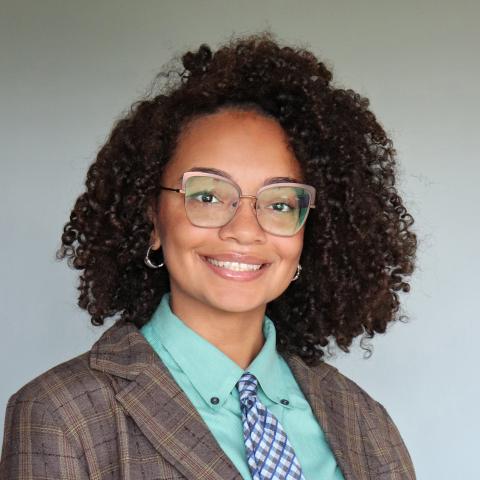
Presenter: Mya Urena
Presenter: Varun Athilat
The Language of Successful Persuasion on r/ChangeMyView
Varun Athilat and Laura K. Allen
Spoken Presentation: 2:50 pm, Room B
Persuasion theories are shaped around lab studies, limiting insight into persuasive processes in digital environments. We investigated r/ChangeMyView, a Reddit community where users invite challenges to their beliefs and award “deltas” to successful persuaders. We analyzed linguistic features of persuasive comments and found that epistemic language and first-person framing reduced persuasive effectiveness, whereas lexical sophistication, second-person framing, and semantic overlap with the post increased it. These findings provide new insights into persuasion in text-based contexts.