Exploring Learner Language
This website is adapted from Exploring Learner Language, an innovative workbook and accompanying videos designed to provide hands-on experience studying the language used by English learners. The videos feature six adult English as a second language (ESL) learners and (for comparison) two native speakers of English, all completing the same individual and paired oral and written communication tasks. In carrying out a guided analysis of the language the learners use in these tasks, teachers can develop instructional skills in identifying their students’ language-learning needs. The Exploring Learner Language website is designed to be used either as part of an introductory class on second language acquisition (SLA) or in self-study by individuals. In either context, the materials on this site are meant to be supplemented by readings from SLA textbooks, classroom-based lectures and discussions, or conversations with peers. Suggestions for further readings are provided at the end of each chapter. Learn more about the history of the work behind Exploring Learner Language and watch a video
Originally recorded by the New School in April 2010, featuring authors Tarone and Swierzbin, who provide an introduction to the materials.
How to use the materials on this website:
- Each chapter presents a different window on learner language; related books and articles providing in-depth information on the topic are cited throughout.
- Each chapter contains exercises in which readers explore the language learners use and the way it is developing.
- Links to the resources needed to complete exercises (videos and transcripts) are included within each chapter.
- These materials are licensed under a Creative Commons Attribution-NonCommercial-ShareAlike 4.0 International license.
- How to cite: Tarone, E., & Swierzbin, B. (2025). Exploring Learner Language. https://carla.umn.edu/learnerlanguage/book

Sections
- Chapter One: Second Language Learners
- Chapter Two: Second Language Acquisition Research
- Chapter Three: Exploring Errors and Interlanguage
- Chapter Four: Exploring Developmental Sequences
- Chapter Five: Learning in Interaction
- Chapter Six: Exploring Reference
- Chapter Seven: Exploring Complexity in Language
- Chapter Eight: Exploring Learner Language in the Classroom
- Answer Discussion Section
- Bibliography
- Glossary
- Task Prompts (all)
(PDF) - Sample Consent Form
- Forms (Available as copyable Google Docs)
- Table 3.1 Error Analysis/Contrastive Analysis (EA/CA)
- Table 3.2 Phonological Errors in Context
- Table 3.3 Correct and Incorrect Versions of Target Form
- Table 6.1 Form: Characters in the Narrative Task
- Table 7.4 Form: Inference and Justification
- Full Transcript (PDF)
- Transcripts by Individual and Pair (PDFs)
- Rodrigo Transcript
- Antonio Transcript
- Rodrigo and Antonio Joint Tasks Transcript
- Xue Transcript
- Chun Transcript
- Xue and Chun Joint Tasks Transcript
- Catrine Transcript
- Jeanne Transcript
- Catrine and Jeanne Joint Tasks Transcript
- Olivia Transcript
- Victoria Transcript
- Olivia and Victoria Joint Tasks Transcript
- Antonio
- Interview
- Question Task
- Retell Task
- Narrative Task
- Jigsaw Task
(with Rodrigo) - Comparison Task
(with Rodrigo)
- Rodrigo
- Interview
- Question Task
- Retell Task
- Narrative Task
- Jigsaw Task
(with Antonio) - Comparison Task
(with Antonio)
- Chun
- Interview
- Question Task
- Retell Task
- Narrative Task
- Jigsaw Task
(with Xue) - Comparison Task
(with Xue)
- Xue
- Interview
- Question Task
- Retell Task
- Narrative Task
- Jigsaw Task
(with Chun) - Comparison Task
(with Chun)
- Catrine
- Interview
- Question Task
- Retell Task
- Narrative Task
- Jigsaw Task
(with Jeanne) - Comparison Task
(with Jeanne)
- Jeanne
- Interview
- Question Task
- Retell Task
- Narrative Task
- Jigsaw Task
(with Catrine) - Comparison Task
(with Catrine)
- Olivia
- Question Task
- Retell Task
- Narrative Task
- Jigsaw Task
(with Victoria) - Comparison Task
(with Victoria)
- Victoria
- Question Task
- Retell Task
- Narrative Task
- Jigsaw Task
(with Olivia) - Comparison Task
(with Olivia)
Ways of Seeing Learner Language
Overview of Learner Characteristics
There is a considerable amount of research on individual characteristics of "good language learners." Factors that may or may not make a difference include:
-
The learner's aims and purposes in learning the language
Does the learner want to get a high score on a standardized grammar test, or is the learner's goal to be able to communicate with people in social or professional situations? Some learners aim for accuracy and others aim for communicative effectiveness.
-
Exposure to the language
Has the learner only been exposed to more formal language in the classroom, where there is often more emphasis on accuracy? Or has the learner been able to interact with native speakers outside the classroom where more informal varieties of the language are spoken? So-called "heritage speakers" of a language "have incomplete knowledge of a first, native language acquired in childhood" (Montrul, 2014, p. 93); they may have been exposed to the language at home, but have little mastery of formal varieties because their home language is not a medium of instruction in school.
-
Age
How old was the learner when he or she began to study the language? Our ability to learn a second language gradually declines as we get older, starting in early childhood. For example, Scovel (2001, pp. 113-116) and others argue that native-like pronunciation is almost always easier to achieve before puberty.
-
Motivation
How much does the learner want to learn the language? And is the learner's motivation more practical (instrumental motivation), or social and emotional (integrative motivation)? Although motivation type is hard to measure, many researchers and teachers believe that a learner's willingness to put in a lot of effort is a very important factor in determining success in learning a second language.
-
Personality
Do personality traits such as empathy (Guiora et all, 1972) and risk-taking (Beebe, 1983) affect success in learning a second language? Some research suggests that one's ability to empathize with speakers of the other language causes one to speak in more native-like ways. Such personality types as 'extrovert' (sociable, out-going, with many friends) vs. 'introvert' (quiet, observant, with smaller numbers of close friends) have not been found to affect success in second language learning. Both personality types can succeed.
-
Language aptitude
Do some learners have an aptitude, or special ability for language learning? Learners with a higher aptitude for formal classroom learning draw on a combination of linguistic, memory, and auditory ability.
-
Learning styles and strategies
Do students' preferred learning styles and strategies affect their success or even the nature of their learner language? Researched learning styles, or preferences for learning second languages, can be concrete, analytical, synthesizing, communicative or authority-based. Some learners want clear rules and others are content with ambiguity. Learning strategies may include memorization, use of flashcards, or mnemonics.
Most language teachers believe that individual learner characteristics cause students to follow very different paths to success in learning a second language. What do you think? Can you predict how learners will do in your classes, based on their individual characteristics and language background?
Multimedia Activities focused on Learner Characteristics
Overview of Error Analysis
What is an error?
An error is a form in learner language that is inaccurate, meaning it is different from the forms used by competent speakers of the target language. For example, a learner of Spanish might say "Juana es *bueno," which is not what competent speakers of Spanish would say. The accurate form should be "buena."
What is error analysis?
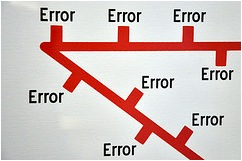
Error analysis is a method used to document the errors that appear in learner language, determine whether those errors are systematic, and (if possible) explain what caused them. Native speakers of the target language (TL) who listen to learner language probably find learners' errors very noticeable, although, as we shall see, accuracy is just one feature of learner language.
While native speakers make unsystematic 'performance' errors (like slips of the tongue) from time to time, second language learners make more errors, and often ones that no native speaker ever makes. An error analysis should focus on errors that are systematic violations of patterns in the input to which the learners have been exposed. Such errors tell us something about the learner's interlanguage, or underlying knowledge of the rules of the language being learned (Corder, 1981, p. 10).
How to do an error analysis
Although some learner errors are salient to native speakers, others, even though they’re systematic, may go unnoticed. For this reason, it is valuable for anyone interested in learner language to do a more thorough error analysis, to try to identify all the systematic errors. This can help researchers understand the cognitive processes the learner is using, and help teachers decide which might be targeted for correction. Researchers have worked out the following procedure for doing an error analysis Corder (1975).
1. Identify all the errors in a sample of learner language
For each error, what do you think the speaker intended to say, and how they should have said it? For example, an English learner may say, "*He make a goal." This is an error. However, what should the learner have said? There are at least two possible ways to reconstruct this error: (1) He MAKES a goal, and (2) He IS MAKING a goal. In this first step of an error analysis, remember that there may be more than one possible way to reconstruct a learner error. Tarone & Swierzbin (2009, p.25) offer another example from an English language learner:
Learner: …*our school force us to learn English because um it’s, it’s a trend.
Here are three different possible reconstructions:
Our school forced us to learn English because it was a trend.
Our school required us to learn English because it was a popular language.
Because everyone felt it was important, English was a requirement at our school.
The way you reconstruct a learner error depends on what you think the intended message is. An added complication is that any given learner utterance may contain errors at many levels at once: phonological, morphological, syntactic, lexical.
Finally, determine how systematic the error is. Does it occur several times, or is it just a performance slip (a mistake)? Even native speakers of a language make one-off mistakes when they're tired or distracted.
2. Explain the errors
Once you've identified systematic errors in your sample of learner language, think of what might have caused those errors. There are several possibilities. Some errors could be due to native language transfer (using a rule or pattern from the native language). Some could be developmental—errors most learners make in learning this language no matter what their native language. Induced errors may be due to the way a teacher or textbook presented or explained a given form. Communication strategies may be used by the learner to get meaning across even if he or she knows the form used is not correct (Selinker 1972 discusses these and other possible causes of systematic learner errors). Explaining errors in learner language isn't always straightforward; for example, sometimes an error may appear to have more than one cause. As Lightbown & Spada (2013, p. 45) say, "... while error analysis has the advantage of describing what learners actually do … it does not always give us clear insights into why they do it."
What error analysis misses
Error analysis is a good first step, but it also can miss important features of learner language. First, in focusing only on errors, you may miss cases where the learner uses the form correctly. For example, you may notice that a learner makes errors in pronouncing a TL sound before consonants, but not notice that she is producing the sound correctly before vowels. The second thing an error analysis misses is avoidance. Schachter (1976) pointed out that learners can avoid using features of a TL that they know they have difficulty with. For example, you may see very few errors in relative clauses in a sample of English learner language, but then realize that's because the learner simply isn't producing many relative clauses—correct OR incorrect. Avoidance can lead to the absence of errors—but absence of errors in this case does NOT mean the learner has no problems with relative clauses. Finally, error analysis focuses only on accuracy. Accuracy is just one of three ways of describing learner language: accuracy, complexity and fluency. If teachers judge learner language only in terms of accuracy, the learners' development of complexity and fluency can suffer. (See the section on Complexity)
Learning more
To learn more about error analysis, we recommend that you read Chapters 3 and 4 in Ellis and Barkhuizen (2005).
Multimedia Activities focused on Learner Characteristics
Overview on Interlanguage
Interlanguage
As discussed in our introduction to error analysis, learner language evidences linguistic system.
Interlanguage (IL) is a term for the linguistic system that underlies learner language. We see that system when the learner tries to use learner language in unrehearsed communication (Selinker 1972). In error analysis, you looked at learner language in terms of deviance from the target language norms; that deviance we call 'error.' In interlanguage analysis, you can look at the same learner language but now you ask what system the learner might be using to produce the patterns you observe. Interlanguage is usefully viewed as a transitional linguistic system (at all levels: phonology, morphology, syntax, semantics, pragmatics) that is different from the target language (TL) system and also different from the learner's native language (NL) system. It can be described in terms of evolving linguistic patterns and norms, and explained in terms of specific cognitive and sociolinguistic processes that shape that system.
To illustrate the difference between error analysis and interlanguage analysis: an error analysis might tell you that a learner makes a lot of errors in marking gender in French, while an interlanguage analysis may show that that learner is using a system where masculine gender is used for all nouns and noun modifiers. This gender marking system results in some errors (e.g. when referring to females) but also some seemingly correct forms (when referring to males). The cognitive process of overgeneralization that leads to this pattern is very typical of interlanguage.
Developmental Sequence
One way we can see systematicity in learner language is in the common developmental sequence followed by learners from different native language backgrounds when they acquire such linguistic structures as questions or negation in English L2 or German L2. For example, videos in Tarone & Swierzbin (2009) show learners of English L2 producing the same stage 3 questions as they speak in unrehearsed communication tasks. In stage 3 questions, these learners start with a question word like "what" or "why" and then use declarative word order (Q + subject + verb + object):
Xue: What he is doing?
Antonio: Why this guy say, stop?
Catrine: Why the bus driver can’t stop for him?
Though the 3 learners above have different native languages (Chinese, Spanish and French), they all produce stage 3 questions in English. Notice that stage 3 questions do not appear in English input from native speakers or English grammar books. Yet they are part of a seemingly universal developmental sequence for second language acquisition of English questions.
Human Cognition in Acquisition
Researchers believe that developmental sequences in second language acquisition result from cognitive processes in the human brain: language processing that all humans can be expected to use whenever they learn a second language. Research studies now suggest that it is common for learners to form overgeneralized rules at first, and also (as we have seen) that there are developmental sequences that learners can be expected to move through on their own, IF they are provided with adequate input in the language, the opportunity to use the language to communicate, and corrective feedback from more knowledgeable users of the language (Lightbown & Spada, 2013). In other words, Corder’s (1967) construct of the learner’s ‘built-in syllabus’ has research support. For a review and update on current interlanguage research, see Han & Tarone (2014).
Multimedia Activities focused on Interlanguage
Overview on Learning in Interaction
 For many years, we thought of the process of language learning as a matter of construction, in which learners consciously memorized grammar rules and vocabulary, and recited them in a testing environment. In this view, we would build a language the way we might construct a wall of bricks. In such a process the learner consciously focuses on language rules and vocabulary. But second language acquisition research suggests that such a focus on form is inadequate if the goal is to use the language to communicate.
 Corder (1967) proposed a more organic view of second language acquisition, where learner language development is guided by the learner's 'built-in syllabus,' just as a plant's development is guided by its DNA. Like a plant, learner language develops best in good environmental conditions: communicative input, and meaning-focused interaction that includes supportive scaffolding from others.
Current research on second language acquisition (SLA) suggests that learners benefit if they use their learner language in interactions where they are focused on making meaning with someone else. Language teachers engage students In spontaneous, unrehearsed oral interactions where they are encouraged to help each other make meaning by providing input, scaffolding, and support at moments when each learner needs help. Research shows that when they learn to interact this way, learners co-construct more complex and accurate utterances than they could possibly produce alone. Research also shows that corrective feedback that’s provided and noticed in the midst of meaningful interactions can be more effective than grammar-focused drills. Learner language that is used in spontaneous, unrehearsed interactions has many opportunities to develop and grow.
We like the following summaries from leading proponents of a sociocultural approach to SLA research:
Second-language learners are ‘individually novices’ but ‘collectively experts’. Collective scaffolding [in interaction] can ‘reduce the gap between task difficulty level and individual abilities’ (Donato, 1994)
‘People working jointly are able to co-construct contexts in which expertise emerges as a feature of the group.’ The Zone of Proximal Development (ZPD) ‘is more appropriately conceived of as the collaborative construction of opportunities for individuals to develop their mental abilities’ (Lantolf, 2000, p. 17).
‘Speaker/hearers collaboratively produce utterances which they jointly own. And language acquisition is realized through a collaborative process whereby learners appropriate the language of the interaction as their own, for their own purposes, building grammatical, expressive and cultural competence through this process.’ (Ohta, 2000, p. 51)
Learning more
To learn more about the way second language learners acquire new vocabulary and grammar in interaction, read Donato (1994) and the chapters in Lantolf (2000) and Mackey (2007).
Multimedia Activities focused on Interaction
Overview on Referential Communication
Referential Communication
Referential communication occurs when two speakers exchange information. A speaker refers to entities (things and people) and their location or movement, by naming or describing them clearly so that a listener can identify them (which one?), their locations (where?) and movements (what did they do?) (Yule 1996, 1997). Acts of reference are evaluated in terms of their communicative effectiveness, not their grammatical accuracy: is the speaker successful in referring the listener to the intended entity or action? Certain linguistic forms in every language are useful as tools that enable speakers to refer to entities and actions clearly.
 In English for example, if you want to look more closely at one of the toy cars to the left, and the salesperson asks 'which one?' you can refer precisely to the one you want by using linguistic devices that help make acts of reference effective. In English, these devices include:
- names (the Corvette)
- noun modifiers, like adjectives (the light green car)
- prepositional phrases (the car in the upper right-hand corner)
- relative clauses (the car that you just put on the shelf).
Old and New Information
In effective referential communication in all languages, the speaker indicates to the listener whether what is being referred to is given (or old) information—information the speaker assumes the listener already knows—or new information, something the speaker assumes the listener does not already know.
Communication Strategies
It is common for learners of a language to have difficulty with referential communication. For example, they may not know the words for a great many things they want to refer to. But their lack of exact words doesn't have to shut down communication. Communication strategies (Tarone & Yule 1989) rely on the fact that there are multiple ways to say the same thing; in other words, they offer communicative flexibility. For example, if you don't know the word for 'convertible'' in English, you can try communication strategies like: 'a vehicle', 'a car with a folding roof,' 'a buggy-car,' 'a car that opens to let the wind blow in,' 'a car with no head' -- and of course gestures help with any of these.
There are names in the SLA literature for different types of communication strategies:
Circumlocution: describing an entity in terms of its elements, function or purpose (e.g., a 'crutch' is 'something you lean on when your leg is broken')
Word coinage: making up a word (e.g., 'airball' when you don't know the word 'balloon')
Approximation: using a word that is generally equivalent to the desired word (e.g., 'stick' instead of 'crutch')
Literal translation: translating word for word from the native language (e.g. 'a removable head car' from 'decappottabile' in Italian)
Appeal for assistance: asking for or looking up the word or phrase
If we can give learners opportunities to use such communication strategies, we can support their creativity and improvisational skill in using the language forms they know, engaging others in conversations that provide them with additional input and maybe even corrective feedback to fuel the acquisition process.
Learning More
For more on referential communication, read Yule (1996, 1997), and for more on communication strategies, read Tarone & Yule 1989.
Multimedia Activities focused on Referential Communication
Overview of Complexity of Learner Language
Social Language and Academic Language
Most communicative tasks used in language classrooms focus on what Cummins (1981, 2000) has called social language, or "basic interpersonal communication." Social language typically refers to concrete, observable things, people, and actions. Social language is supported by contextual information (e.g., visual information about people and places) that clarifies what is communicated verbally.
Academic language proficiency is the ability to use cognitively demanding language (e.g. abstract nouns and complex syntax) as a tool for critical thinking, with little contextual support in the sending and receiving of information.
 Language Complexity
Cognitive complexity is related to complexity in language, both sentence structure and lexicon. A functional linguistics perspective (Schleppegrell, 2004) shows how language forms function to express a wide range of logical relationships in academic discourse. For example, what words signal the logical relationship between an inference and the facts that support it? In English, the function of inference may be expressed using abstract words like 'wealthier', while the function of evidence may consist of observable, concrete words, such as 'garage,' 'car,' 'peeling paint', or 'satellite dish'. Linguistic constructions like 'because' or 'just based on' are also needed for the function of linking inferences to support (Lackstrom, 1981).
Academic language is characterized by an increase in abstract nouns; very complex noun phrases with multiple levels of embedding; and relative, adverbial and complement clauses (Biber 2006). Such linguistic variety is more cognitively demanding. In addition, the lack of contextual support puts pressure on the speaker to be more precise, to make sure the listener understands. Higher levels of proficiency entails mastery of the more complex registers and uses of academic language.
Measuring Syntactic Complexity
How do we measure the syntactic complexity of learner language? Different measures are used for written vs. spoken language. The T-unit is a common measure of complexity in written language. But T-units don't work so well with spoken language, which typically has sentence fragments, false starts, and turn overlaps. In looking at spoken English L2, Tarone & Swierzbin (2009) counted the number of sentences containing more than one verb. However, you could also count learners' complex noun phrases, or verb arguments, or various types of dependent clauses, like relative or infinitive clauses. (Ellis & Barkhuizen, 2005, p.147-156) detail how to use different complexity measures for both written and spoken learner language.
Measuring Lexical Complexity
One useful way to measure complexity in vocabulary is to document variety in the words occurring in a segment of language. A type-token ratio (TTR) is the total number of different words (types) divided by the total number of words (tokens) in a given segment. For example, that last sentence contains 24 different words (tokens), but several of those words (like ‘a’, ’the’, ‘words’) occur more than once, so there are only 18 types. The TTR of that sentence is 18/24. The closer the TTR ratio is to 1, the greater the lexical richness of the segment. Usually written language has a higher TTR than spoken language.
Another way to analyze social vs. academic vocabulary is to measure learners' use of concrete vs. abstract nouns. Increased use of abstract nouns might be one signal of increased cognitive complexity, since abstract nouns refer to concepts and categories that are used in performing higher level cognitive operations (see Bloom's revised taxonomy in Anderson & Krathwohl, 2001).
Learning more
To read more about the linguistic and functional characteristics of academic language, see Schleppegrell, 2004; for ideas on teaching academic language, see Zwiers(2008) and his useful website. Ellis & Barkhuizen (2005, p. 147-156) provide very useful examples showing how measures of syntactic complexity work, and Robinson (1995) illustrates type-token ratios (TTR).